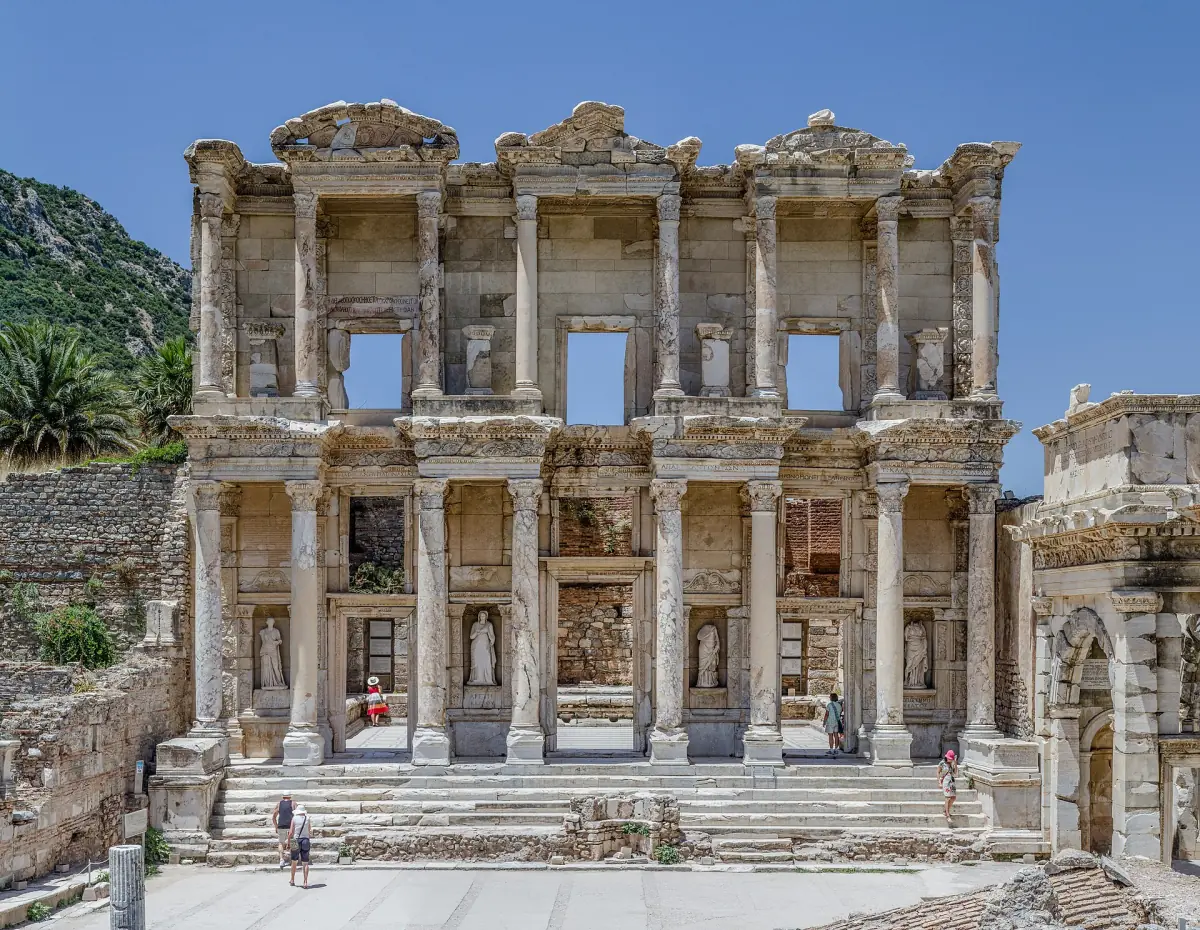
The Library of Celsus at a glance
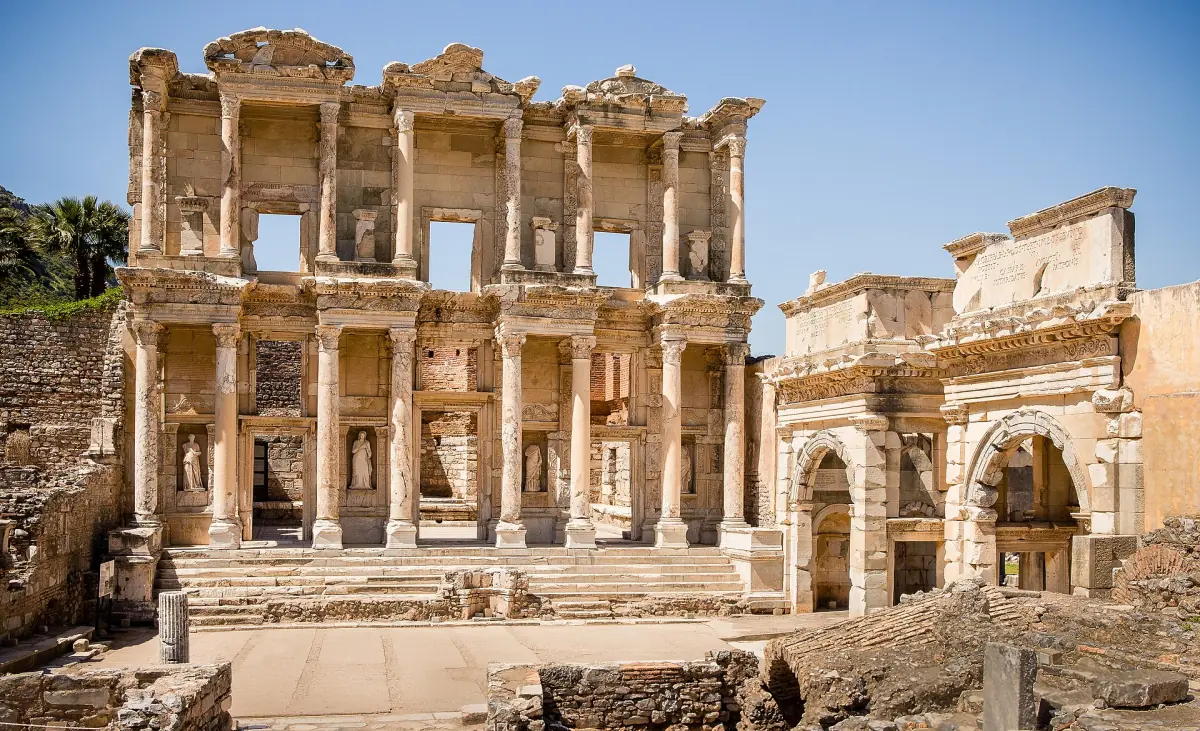
The library stands at the lower end of the Curetes Street. It dates to the 2nd century AD. Its facade was raised again between 1970 and 1978 from original parts, with additional materials, so it is not a Roman building that survived intact.
There is no separate ticket. The library is part of the site, which costs €40 for foreign adults in 2026. In winter the site is open from 8:00 to 18:00, with the ticket office open until 17:30. If you would rather hear the story from a guide, look at the guided Ephesus tours.
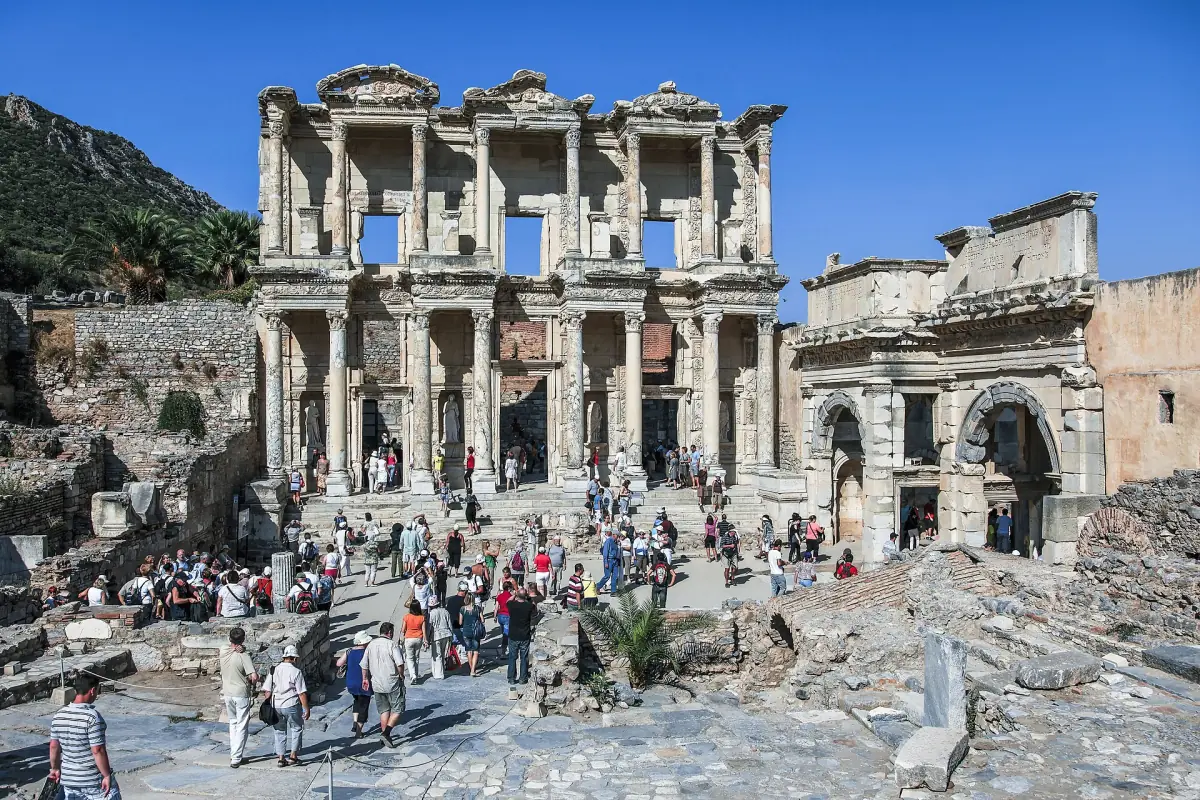
Who built it, and when
The basic story is clear. A few details are less certain.
A son's monument
Gaius Iulius Aquila built the library for his father, Tiberius Iulius Celsus Polemaeanus. The burial chamber of Celsus lies beneath the building. Aquila is sometimes also given the first name Tiberius, so you may see both.
No single date
The library was finished around 135, though some datings put the completion as early as 113 to 117. No year of dedication is certain, so read the date as the 2nd century AD.
History of Ephesus →The scrolls
The library is said to have held around 10,000 papyrus scrolls. Estimates run up to 12,000, and no exact inventory exists.
Our pick: a guided visit past the library
A guide explains the facade and the street in front of it, then continues to Selçuk.
Hand-picked tours, booked through GetYourGuide. Prices are indicative starting prices in euros (as of October 2026). Tap a tour for live availability and the current price in your currency.
Guided visits to the Library of Celsus
Tours of Ephesus that include the library, from Selçuk, Kuşadası and İzmir, with live prices and availability.
The facade and the rebuilding
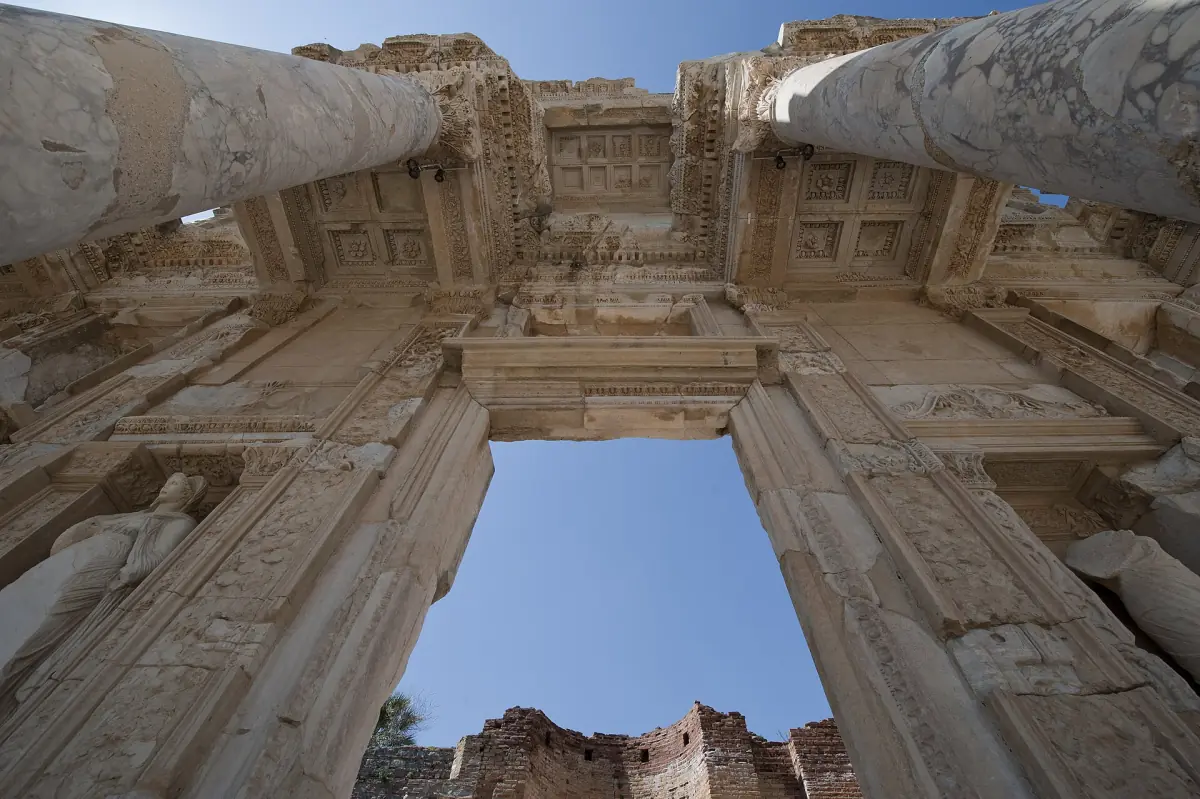
The facade has two storeys of columns, niches and gables. The 1970s work used original parts and added materials where needed. Look closely and you may notice where old and new stone meet.
A restoration project ran in the autumn of 2025, and scaffolding may stand on parts of the facade. Whether the whole front is free of scaffolding on your day is something only the site can tell you. The Marble Road from the library has been closed since 10 April 2025, and the end date is open, so ask on site how the route continues.
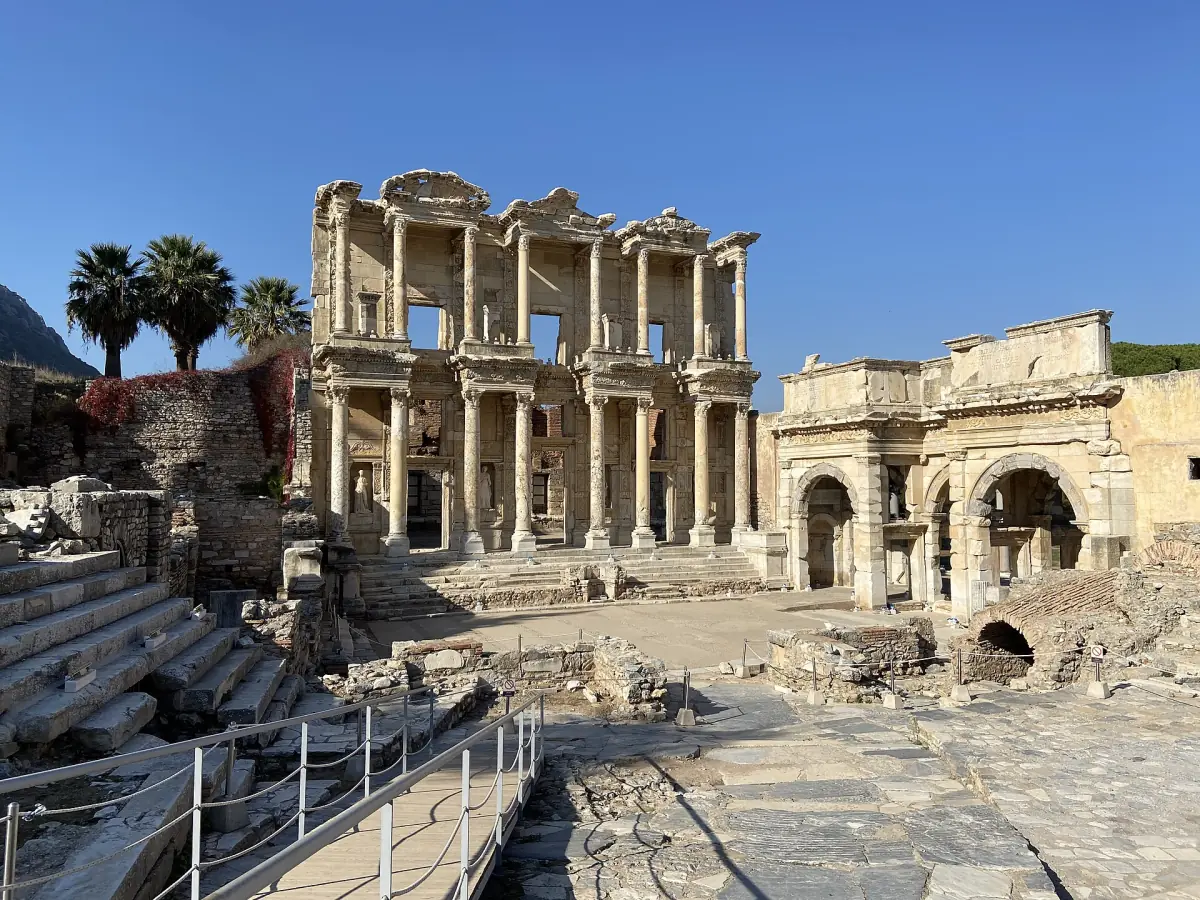
Photographing the facade
No hour of the day guarantees an empty facade or a particular light. The library is a busy stop, especially on days when cruise ships are in port. The Kuşadası cruise port publishes a call calendar, so check it for your date.
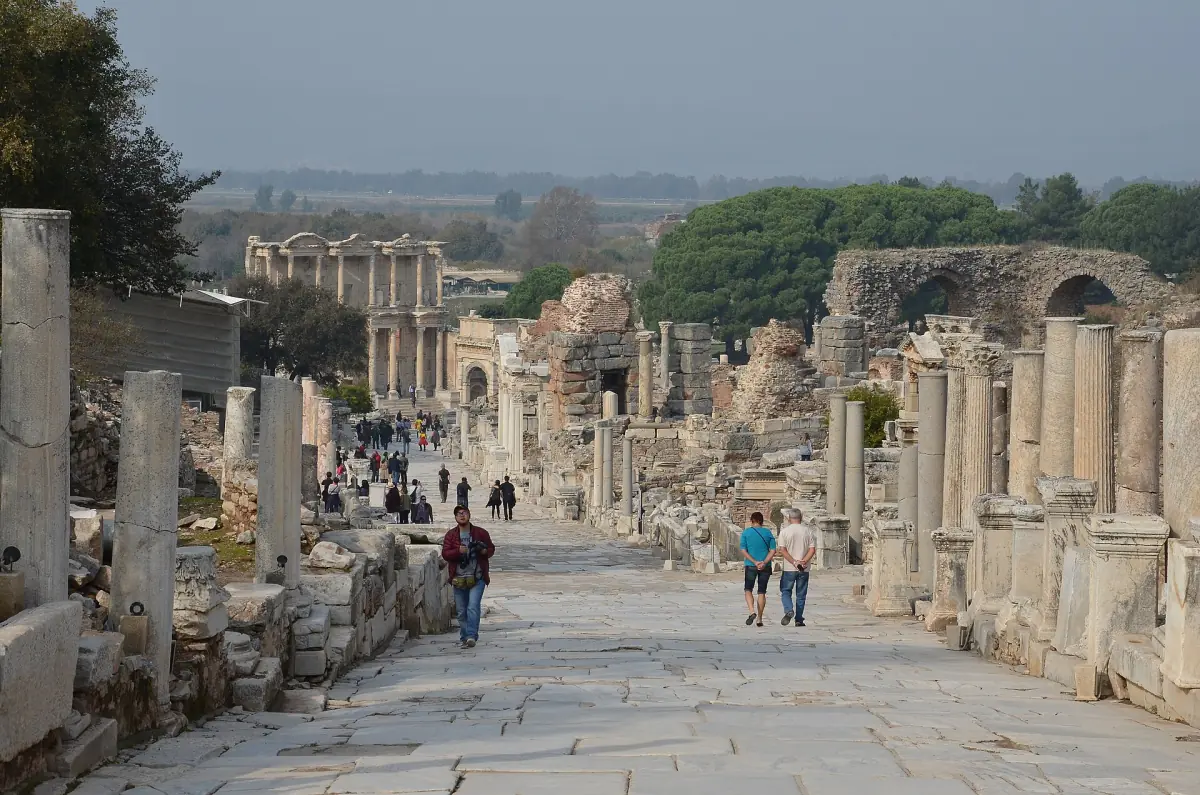
Take a wide shot from the Curetes Street, then move closer for the carved stone details. Step to the side for the view with the gate next to the library. Early in the day is a sensible try, but nothing is guaranteed.
Fitting the library into your visit
It sits near the end of the usual route downhill.
Walk down from the upper gate
The usual route runs from the State Agora and the Odeon past the Prytaneion, the Temple of Hadrian and the Terrace Houses to the library.
Self-guided route →Add the Terrace Houses first
They have their own ticket of €15 and close at 17:00 in winter, an hour before the site.
Terrace Houses →Continue to the theatre
After the library the route leads on to the Commercial Agora and the Great Theatre, with the Harbour Street below.
What else stands on the same stretch
The library is not alone. On the Curetes Street above it you pass the Trajan Fountain and the Temple of Hadrian, dated to 118 to 138 AD. Below the library the route leads on to the Commercial Agora and the Great Theatre. The Great Theatre held about 25,000 spectators in its history, which is the historical capacity and not a visitor limit today.
The Odeon dates to the 2nd century AD and stands near the start of the route. It is a different building from the Great Theatre, so do not mix them up when you read a map.
Give the library time, but keep some for the theatre and the street below. The history page places the building in the longer story of the city.
Library of Celsus: frequently asked questions
Who built the Library of Celsus?
Gaius Iulius Aquila built it for his father, Tiberius Iulius Celsus Polemaeanus, whose burial chamber lies beneath the building. Some accounts give Aquila's first name as Tiberius.
When was the library built?
In the 2nd century AD. It was finished around 135, though some datings put the completion as early as 113 to 117. No single year is certain.
Is the facade original?
Parts of it are. It was put up again between 1970 and 1978 from original parts, with additional materials, so it is not a fully intact Roman building.
Do I need an extra ticket for the library?
No. It is part of the site entry of €40 for foreign adults in 2026. Only the Terrace Houses inside the site need their own ticket.
How many scrolls did the library hold?
Around 10,000 papyrus scrolls is the usual figure, with estimates up to 12,000. There is no exact inventory.