The route in short
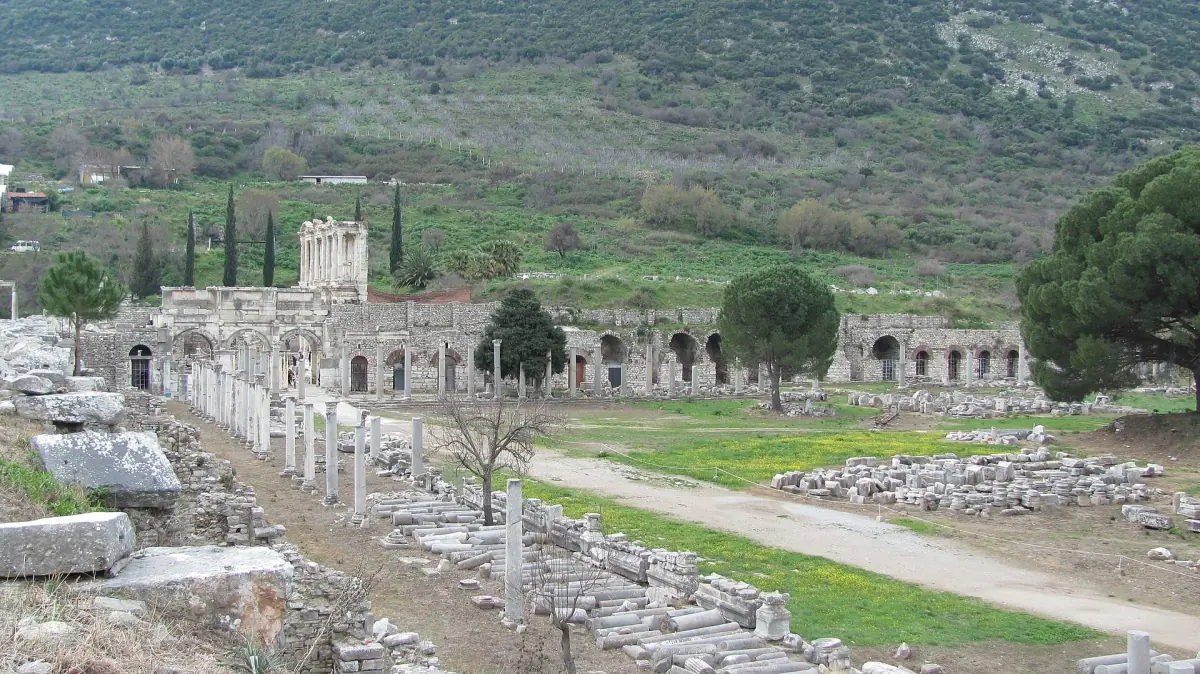
You can walk Ephesus on your own, and the usual plan is to start at the upper gate (Üst Kapı), near the Magnesian Gate, and finish at the lower gate (Alt Kapı). That way the whole walk goes downhill. The sights come in a natural order: State Agora and Odeon, Prytaneion, Domitian Square, Curetes Street with the library at its foot, the Commercial Agora, the Great Theatre and the Harbour Street.
Allow about 2.5 hours for the main route. A cruise port operator uses that figure for planning, and it is a guide, not a rule. Add time for the Terrace Houses, which need their own ticket. If you would rather have the stories explained, compare Ephesus guided tours before you go, or buy your entry first with our Ephesus tickets and hours page.
Before you start
Three things shape the day more than the order of the stops.
The Marble Road is closed
The path along the Marble Road from the Library of Celsus onward is closed, and no reopening date is set. Check the current detour on site before you plan your way from the library to the theatre.
Two gates, two ends
Dolmuş minibuses run between Selçuk and the lower gate, and there is no public return service at the upper gate. Plan how you get back, or arrange a pick-up at the gate where you finish.
Hours differ by area
From 1 October 2026 to 1 April 2027 the site is open 8:00 to 18:00, but the Terrace Houses open 9:00 to 17:00 with the ticket office closing at 16:30. See them early in the walk, not at the end.
Our pick: an entry with an audio route
If you walk on your own, the app tour starts at the upper gate like the route on this page.
Hand-picked tours, booked through GetYourGuide. Prices are indicative starting prices in euros (as of October 2026). Tap a tour for live availability and the current price in your currency.
Ephesus tours and tickets
Guided walks through Ephesus, shore excursions from Kuşadası and day trips, with live prices and availability.
The route, stop by stop
The order follows the slope of the site. Side trips are not a one-way system, so skip or reorder as you like.
1. Upper gate, State Agora and Odeon
The walk begins at the upper entrance. The State Agora was a public square, and the small theatre-like Odeon (Bouleuterion) was built in the 2nd century AD. Do not mix it up with the Great Theatre further down.
2. Prytaneion and Domitian Square
Columns of the Prytaneion mark the civic centre. From here you reach Domitian Square and the Gate of Hercules, where the street turns downhill.
3. Curetes Street
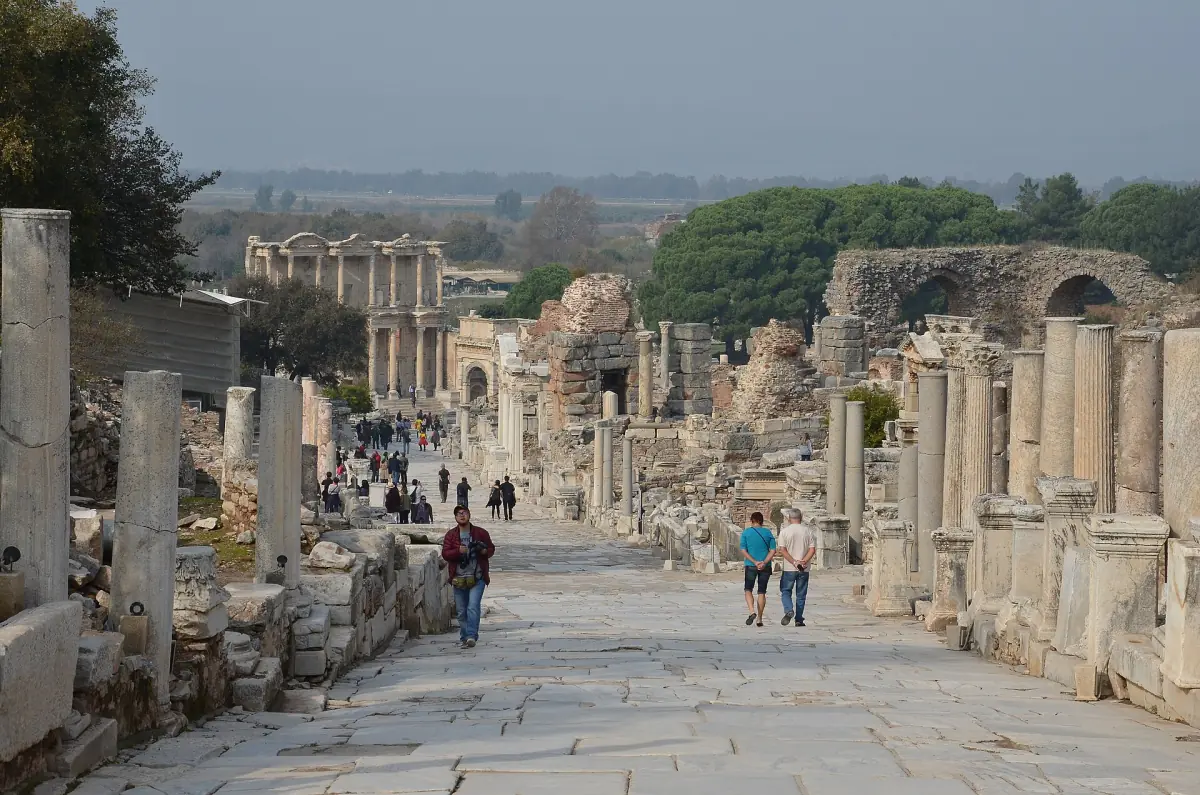
The Curetes Street is the main slope of the route. Along it you pass the Trajan Fountain and the Temple of Hadrian, dated 118 to 138 AD. Its original friezes are in the museum in Selçuk, see the Ephesus Museum page.
4. Side trip: latrines and Terrace Houses
In the lower part of Curetes Street, the public latrines and the entrance to the Terrace Houses branch off to the side. The houses have mosaics, painted walls and a protective roof, and they are worth the extra ticket if you have time.
5. Library of Celsus
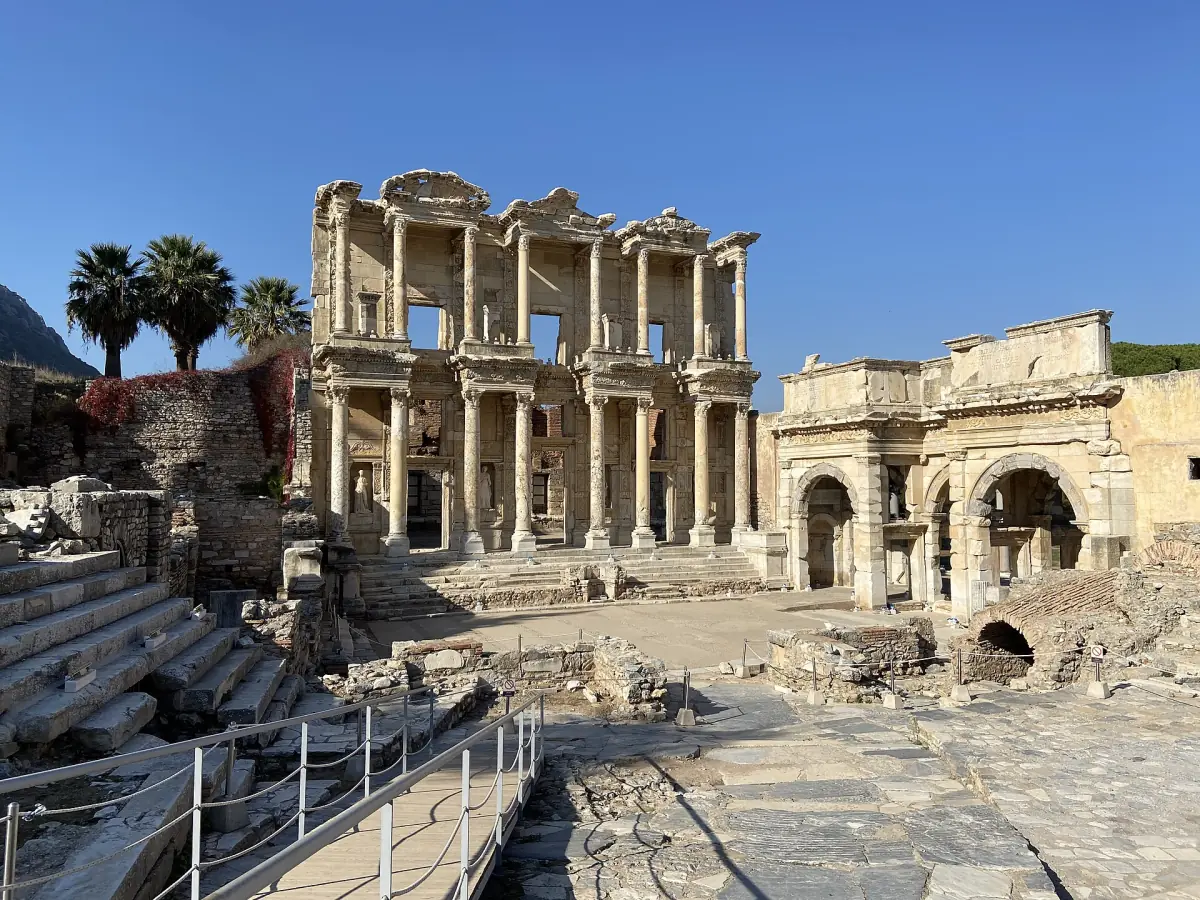
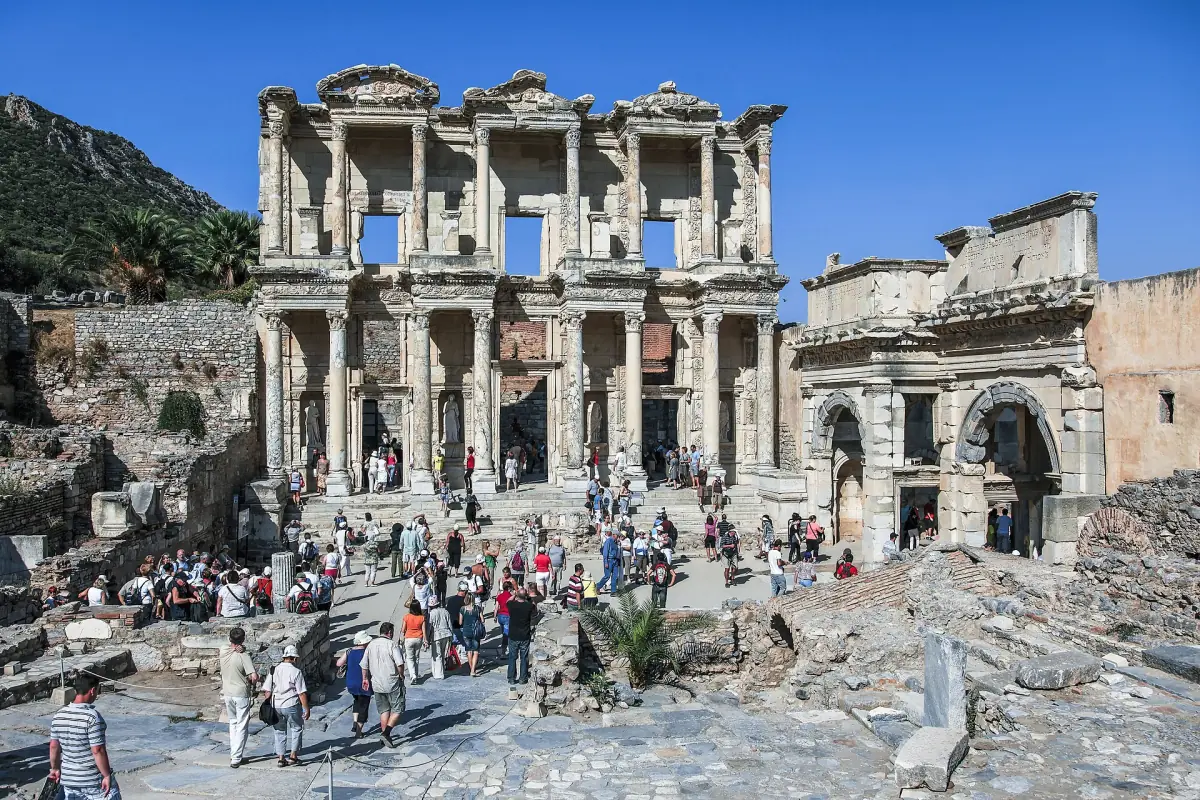
At the foot of Curetes Street stands the facade of the Library of Celsus. It dates to the 2nd century AD and was re-erected between 1970 and 1978 from original pieces plus added material. A restoration project ran in autumn 2025, so check the current state of the facade.
6. Commercial Agora and Marble Road area
Next to the library lies the Commercial Agora. The Marble Road path beyond is closed (see above), so follow the signs and staff for the open way to the theatre.
7. Great Theatre
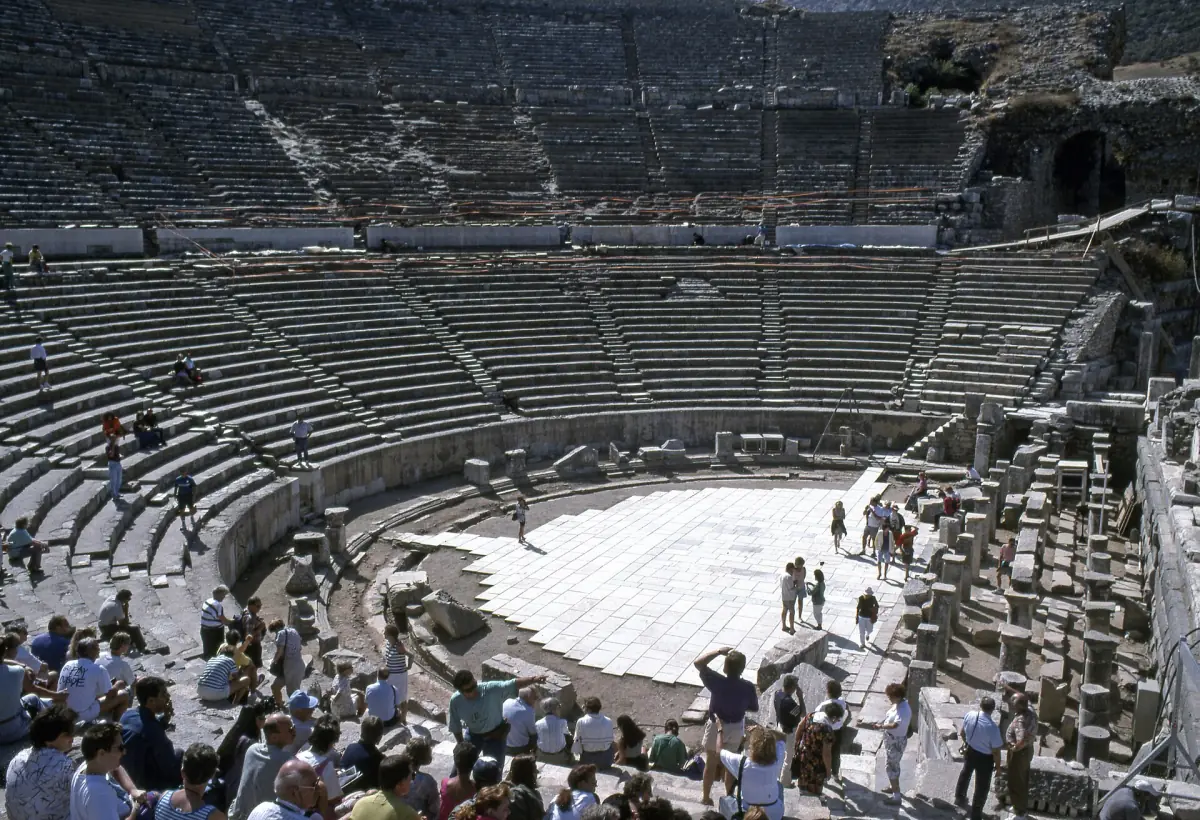
The Great Theatre has an estimated 25,000 seats and goes back to the Hellenistic period, with a Roman rebuild. That is a historic capacity, not the number of visitors allowed today. Some areas can be closed off, so stay on the open stairs.
8. Harbour Street and lower gate
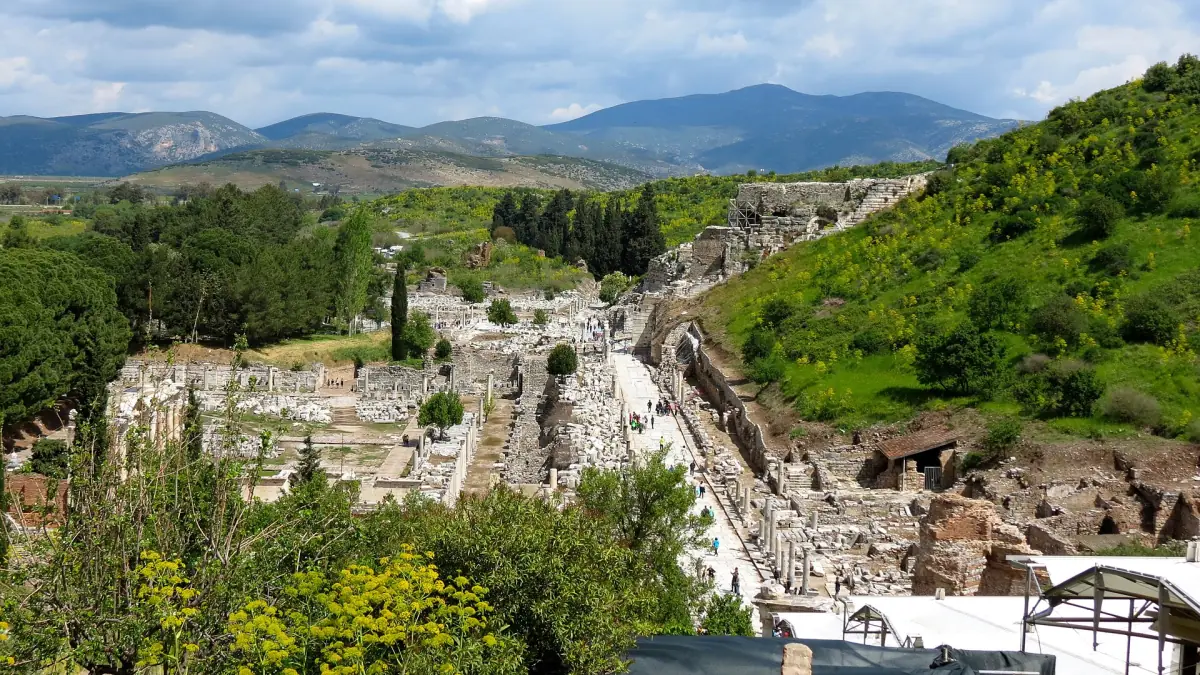
The Harbour Street runs from the theatre toward the lower exit. From the lower gate you can take a dolmuş back to Selçuk or meet your transfer.
This sequence suits most visitors: if you have only a morning, do stops 1 to 3, 5 and 7 and skip the side trip.
Timing and comfort
Practical choices that make the walk easier.
| Choice | Good for | Note |
|---|---|---|
| Start at opening, 8:00 | Summer heat, cruise days | July and August highs average about 33 °C in the region |
| Start from the upper gate | Most visitors | All downhill, but you need a plan to get back |
| Start from the lower gate | Visitors arriving by dolmuş | Walks uphill, so keep more water and time |
| Add the Terrace Houses | Mosaic and fresco fans | Extra €15, shorter hours |
| Skip the side trip | Short visits | Keeps the walk shorter |
For most visitors, the best choice is the upper gate at opening time with water, a hat and a fixed meeting point at the lower gate. A fully shaded route cannot be promised, so plan breaks and drink regularly. Wear shoes with good grip, because the paving is old and uneven. Do not take stones or finds away as souvenirs.
See the theatre properly
Give the theatre a few minutes at the top of the seats, where the view runs out over the plain. Use the stop to check the time and your plan for getting back.
Self-guided tour: frequently asked questions
Where should I start the walk?
Most visitors start at the upper gate near the Magnesian Gate and walk down to the lower gate. The route then runs downhill all the way. Check how you return from the gate where you finish.
How long does a self-guided visit take?
About 2.5 hours is a planning figure for the main route. Add time for photos, the Terrace Houses and the heat. It is a guide and not a minimum or a maximum.
Is the Marble Road open?
No. The path from the Library of Celsus onward is closed, with no reopening date. Ask staff for the current detour and do not climb over barriers.
Do I need a guide in Ephesus?
No guide is required to enter the site. A guide helps if you want the history explained. See Ephesus tours for guided options.
What do the tickets cost?
In 2026 the foreign adult ticket is €40 and includes the digital experience museum. The Terrace Houses cost €15 more. Details are on the tickets page.
Is this site the official Ephesus website?
No. It is an independent travel guide with no link to the site administration, the ministry, a museum or any tour operator.