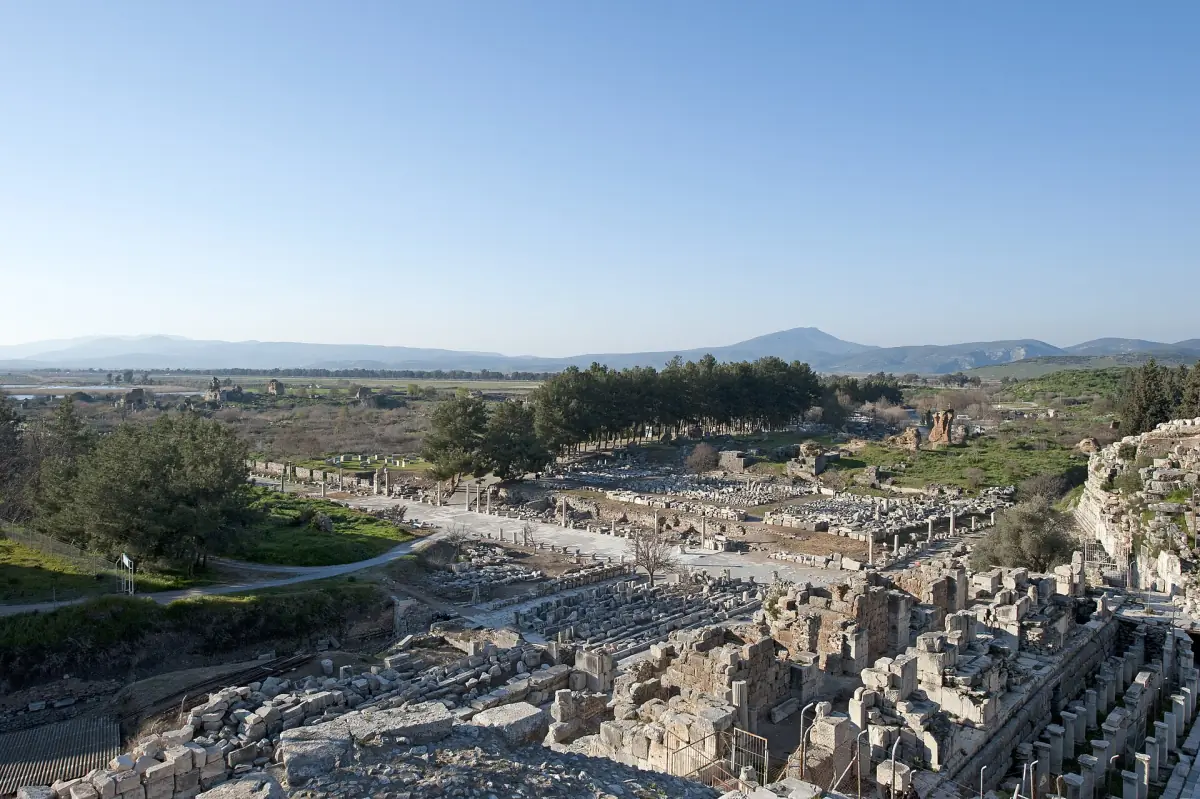
Ephesus in a nutshell
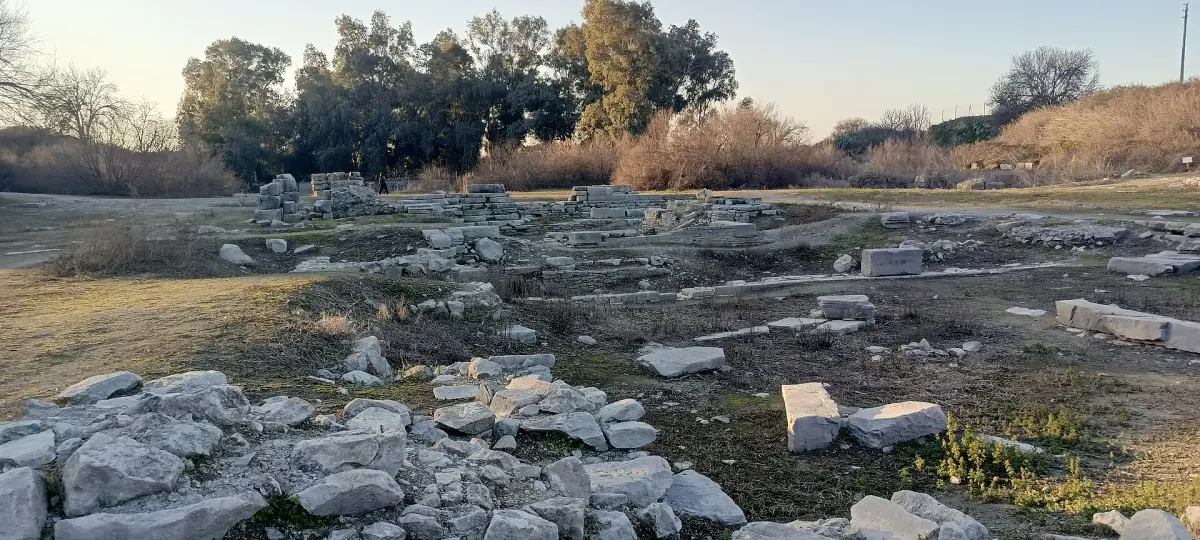
Ephesus lies in the Selçuk district of İzmir province. Turkish uses the name Efes. People lived in the area long before the Ionian city. Çukuriçi Höyük shows settlement from the 7th millennium BC, so the story begins well before the ruins you walk through today.
The ancient city was a port that moved with the coastline, became the capital of the Roman province of Asia and later a Christian centre. Today you can see its Roman streets and public buildings on a visit, and the best way to read them is with a route or a guide. See Ephesus tours for guided options, or Ephesus tickets and opening hours to plan the visit. UNESCO added Ephesus to the World Heritage List in 2015, describing a landscape of settlements with changing city and harbour sites and not only the Roman street you walk today.
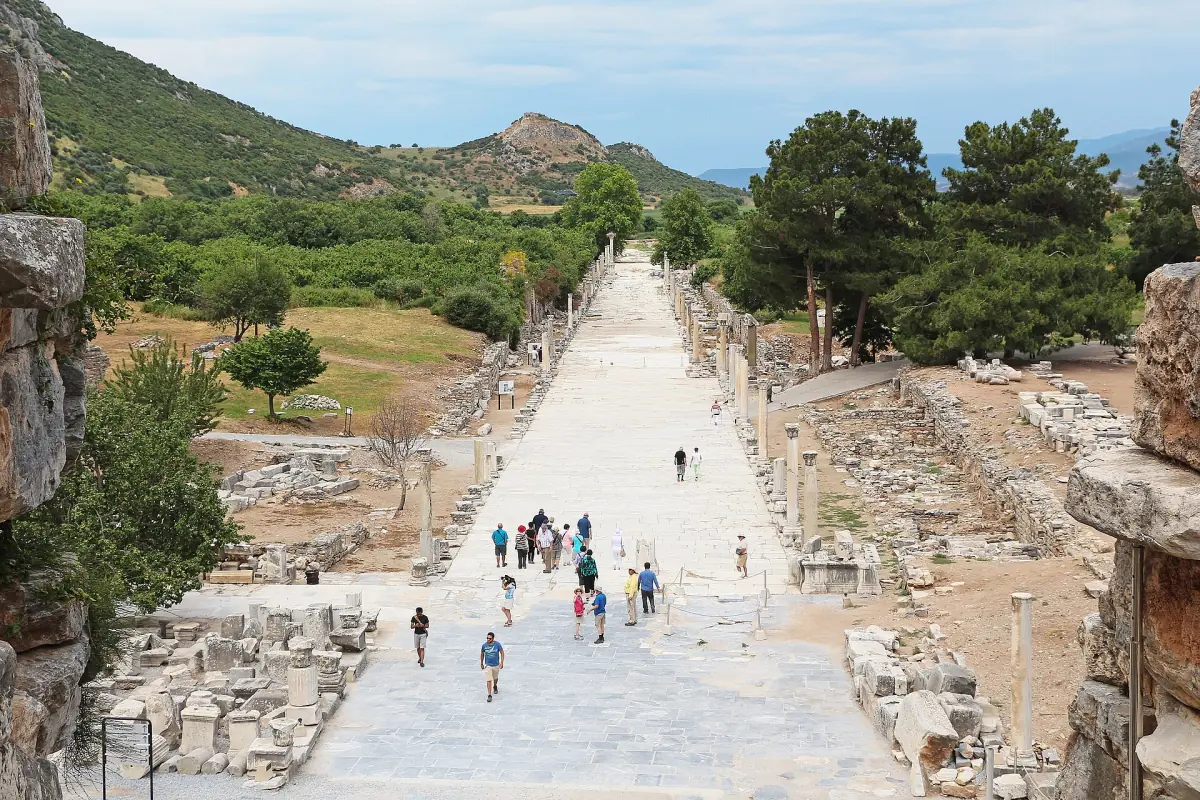
The story in five steps
Dates are rounded where the evidence differs.
Before the city
People lived in the region long before the Ionian city. Çukuriçi Höyük shows settlement from the 7th millennium BC.
The Ionian city and Lysimachus
The Ionian city came next, and Lysimachus later refounded Ephesus. The refounding is certain, but scholars give different centuries for it, so use it as a name and not as a date.
Roman Asia
Ephesus was the capital of the Roman province of Asia, which began with the incorporation in 133 BC.
Harbour and decline
Sediments moved the coast and the harbours westward over time. No single year marks the decline.
Christian Ephesus
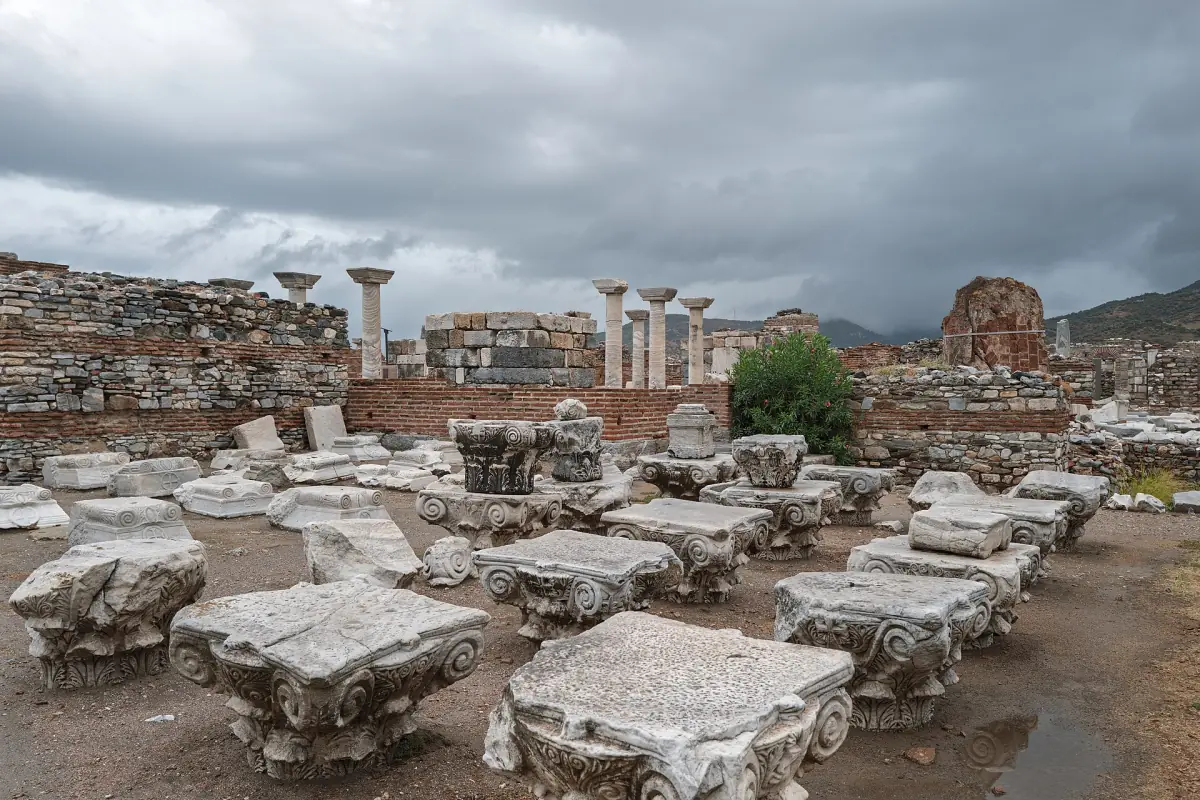
Councils were held in 431 and 449. The Church of Mary and the Basilica of St. John are different places, so keep them apart.
Our pick: a day with a licensed guide
A guide who plans the day with you is the easiest way to hear the history on site.
Hand-picked tours, booked through GetYourGuide. Prices are indicative starting prices in euros (as of October 2026). Tap a tour for live availability and the current price in your currency.
Ephesus tours with history and context
Guided tours that explain the ancient city, plus shore excursions and day trips, with live prices and availability.
Dates for what you see on site
Use these when you stand in front of a building.
| Place | Date or period | Note |
|---|---|---|
| Library of Celsus | 2nd century AD | Facade re-erected 1970 to 1978; no single opening year is certain |
| Temple of Hadrian | 118 to 138 AD | Original friezes are in the museum in Selçuk |
| Odeon | 2nd century AD | Not the same as the Great Theatre |
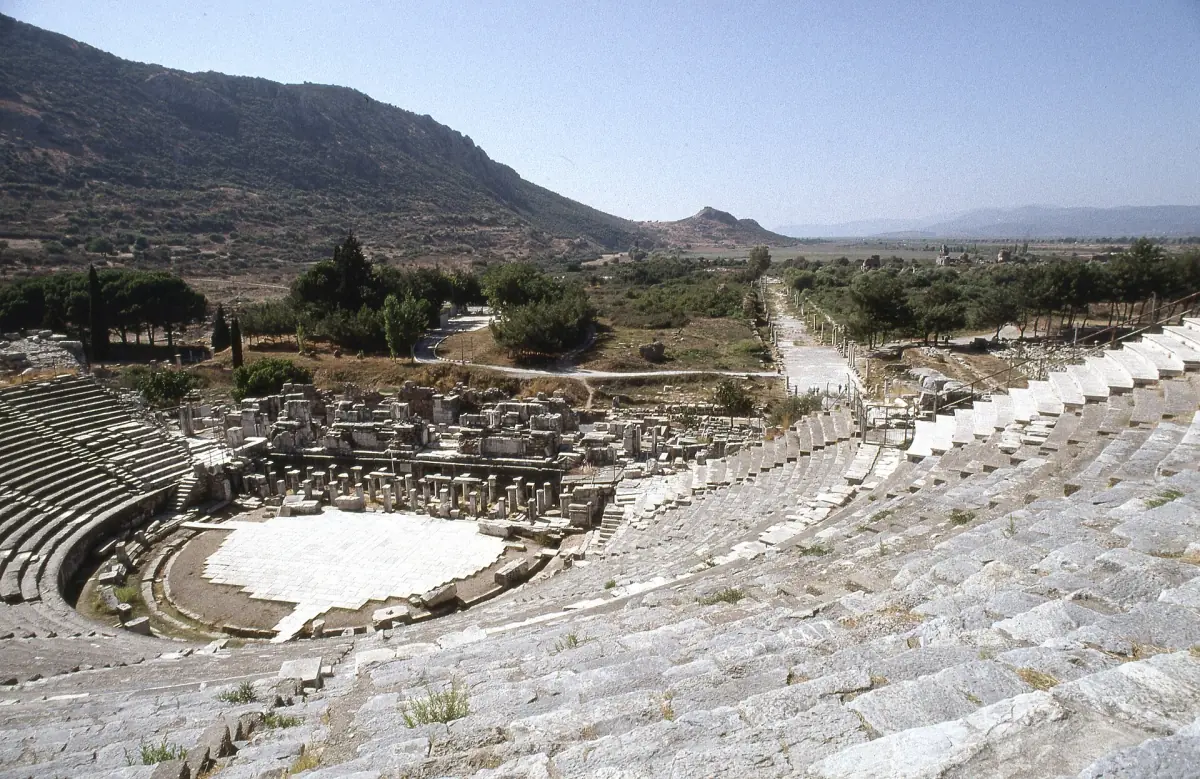
| Great Theatre | Hellenistic origin, Roman rebuild | About 25,000 seats as a historic capacity |
| Column at the Artemision | Raised 1973 | Built from drums of different columns |
| Isa Bey Mosque | 13 March 1375 | Open for prayer again since 28 February 2025 |
For most visitors, the buildings of the 2nd century AD around Curetes Street and the library tell the clearest story, so start there. Walk the buildings in order with our self-guided tour, and see the finds in the Ephesus Museum.
The Library of Celsus: what is certain and what is not
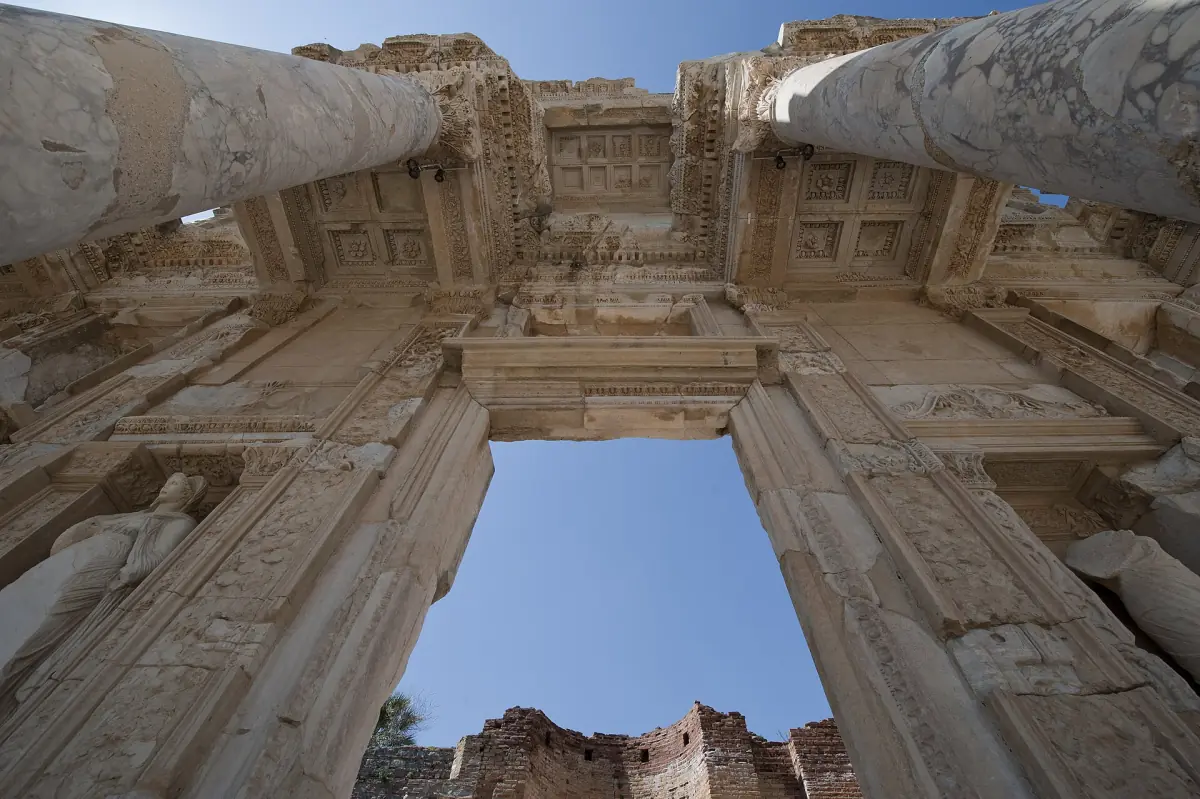
The library is among the best known buildings, but the facts around it are open in places. It dates to the 2nd century AD, and no single opening year is certain. Suggested dates for completion run from about 113–117 AD to around 135 AD.
Gaius Iulius Aquila built it for his father, Tiberius Iulius Celsus Polemaeanus, over the tomb chamber. Some descriptions give Aquila the first name Tiberius, so you will meet both forms. The library is said to have held roughly 10,000 to 12,000 papyrus scrolls, which is an estimate and not an inventory. The facade was re-erected between 1970 and 1978, so it is a reconstruction from original parts with added material. More on the Library of Celsus page.
Faith, tradition and what is known
Ephesus has a strong religious link to early Christianity. Paul and John are tied to the place by tradition and faith, but exact years of Paul's stay and a tomb of John cannot be fixed from the evidence. The shrine at the House of the Virgin Mary presents Mary's stay with John as tradition, and the page treats it that way. Read more on the House of the Virgin Mary page, or see the ruins of the Basilica of St. John in Selçuk.
Excavation and research
Austrian archaeologists have worked at Ephesus since 1895. The Austrian Archaeological Institute began its own work in 1898, so the institute did not itself start in 1895. International teams have also worked on research and restoration. A restoration project at the library took place in autumn 2025, and the Marble Road path from the library onward is closed, so follow the signs on site.
History of Ephesus: frequently asked questions
How old is Ephesus?
Settlement in the area goes back to the 7th millennium BC at Çukuriçi Höyük. The Ionian city and the Roman city came much later.
When was Ephesus the capital of Asia?
From the incorporation of the province in 133 BC. Finer dates are less certain.
Why did Ephesus lose its harbour?
Sediments moved the coast and the harbours westward. The change happened over a long time and not in one year.
Who built the Library of Celsus?
Gaius Iulius Aquila built it in the 2nd century AD for his father, Tiberius Iulius Celsus Polemaeanus. His own first name appears as Gaius in some descriptions and as Tiberius in others.
How many people did the Great Theatre hold?
About 25,000 as a historic capacity. That is not the number of visitors allowed today.
Is this site run by the excavation team?
No. It is an independent travel guide with no link to the excavation, the ministry or any museum.